
Biohacking and Performance Optimization: Why High-Performance Patients Are Redefining Healthcare
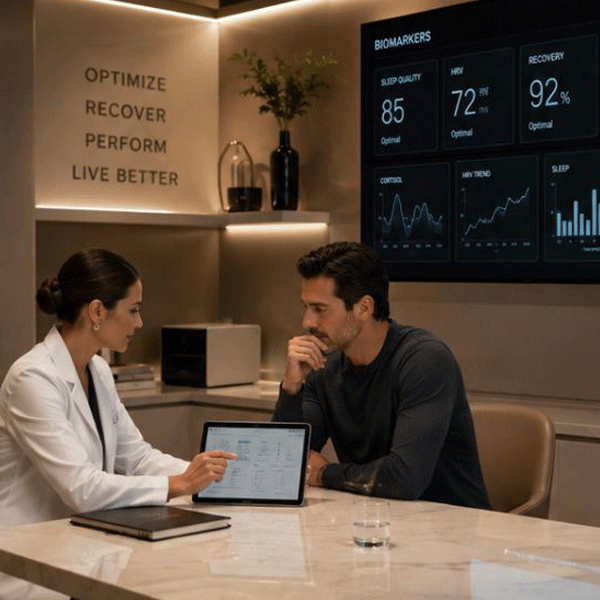
Health Is Becoming a Form of Performance
A growing number of patients are no longer approaching healthcare only when something goes wrong.
Instead, they are asking a different question:
How can I function at my highest level for as long as possible?
This mindset has accelerated the rise of biohacking and performance optimization — a movement focused on understanding and improving how the body and mind operate.
1. What Is Biohacking?
Biohacking refers to intentional strategies designed to optimize physical and cognitive performance.
Depending on the individual and medical guidance, this may include:
* Sleep optimization
* Recovery protocols
* Metabolic tracking
* Nutritional interventions
* Nervous system regulation
* Preventive diagnostics
The goal is not perfection — but greater awareness and efficiency in how the body functions.
2. Why High-Performance Individuals Are Interested
Executives, entrepreneurs, athletes, and high-performing professionals often operate under intense physical and mental demand.
Many are seeking ways to improve:
* Energy levels
* Focus and clarity
* Stress resilience
* Recovery capacity
* Long-term vitality
Biohacking emerged from this desire to approach health more proactively and strategically.
3. The Shift from Reactive to Proactive Healthcare
Traditional healthcare models often focus on treating disease after symptoms appear.
Performance-focused healthcare takes a different approach:
* Identifying early imbalances
* Monitoring physiological markers
* Supporting recovery before burnout occurs
* Creating sustainable routines for long-term health
This reflects a broader transformation toward preventive and personalized care.
4. The Role of Recovery in Performance
One of the most important insights in modern performance science is that optimization depends heavily on recovery.
Without proper recovery, the body cannot:
* Adapt efficiently
* Regulate stress
* Maintain cognitive performance
* Sustain energy long-term
As a result, practices focused on sleep, nervous system balance, and low-stimulation environments have become increasingly valued.

5. The Hale Perspective: Optimization with Balance
At Hale Health Concierge, we view performance optimization through a balanced and medically responsible lens.
Our role is to help patients access:
* Qualified specialists
* Structured wellness environments
* Preventive and recovery-focused experiences
* Personalized journeys aligned with long-term health goals
We prioritize approaches that are sustainable, intentional, and integrated into a broader vision of well-being.
A Smarter Relationship with Health
Biohacking and performance optimization are not about extremes.
At their best, they represent a more conscious relationship with health — one based on understanding, prevention, and longevity.
With Hale, patients explore these evolving approaches through journeys that combine:
* Medical expertise
* Wellness integration
* Recovery-focused care
* And a refined, human-centered experience
Because true performance begins with a body that is supported — not depleted.